 FLOW
FLOWSpecialist source capture and discharge
Laboratory Exhaust Systems
Laboratory exhaust systems selected for containment, source capture, duct and discharge routes, and controls. Each selection is reviewed against the laboratory requirements.

Manufacturer
 INFINAIR
Applications
The exhaust fan is one part of containment.
A laboratory air system connects the capture point, room pressure strategy, exhaust ductwork, fan, discharge and control response. Each part affects the others, so the selection needs coordinated information from the laboratory planner, mechanical design and site layout.
Fume-hood exhaust
Dedicated extraction from laboratory hoods where capture and safe conveyance define the air path.
Research and teaching laboratories
Coordinated exhaust serving variable work areas, room pressure intent and an agreed operating schedule.
Healthcare and diagnostic laboratories
Specialist exhaust considered alongside room containment, filtration interfaces and maintenance procedures.
Controlled chemical-handling spaces
Project-specific source extraction where airstream compatibility and discharge location require review.
How it works
Capture, contain, convey and discharge.
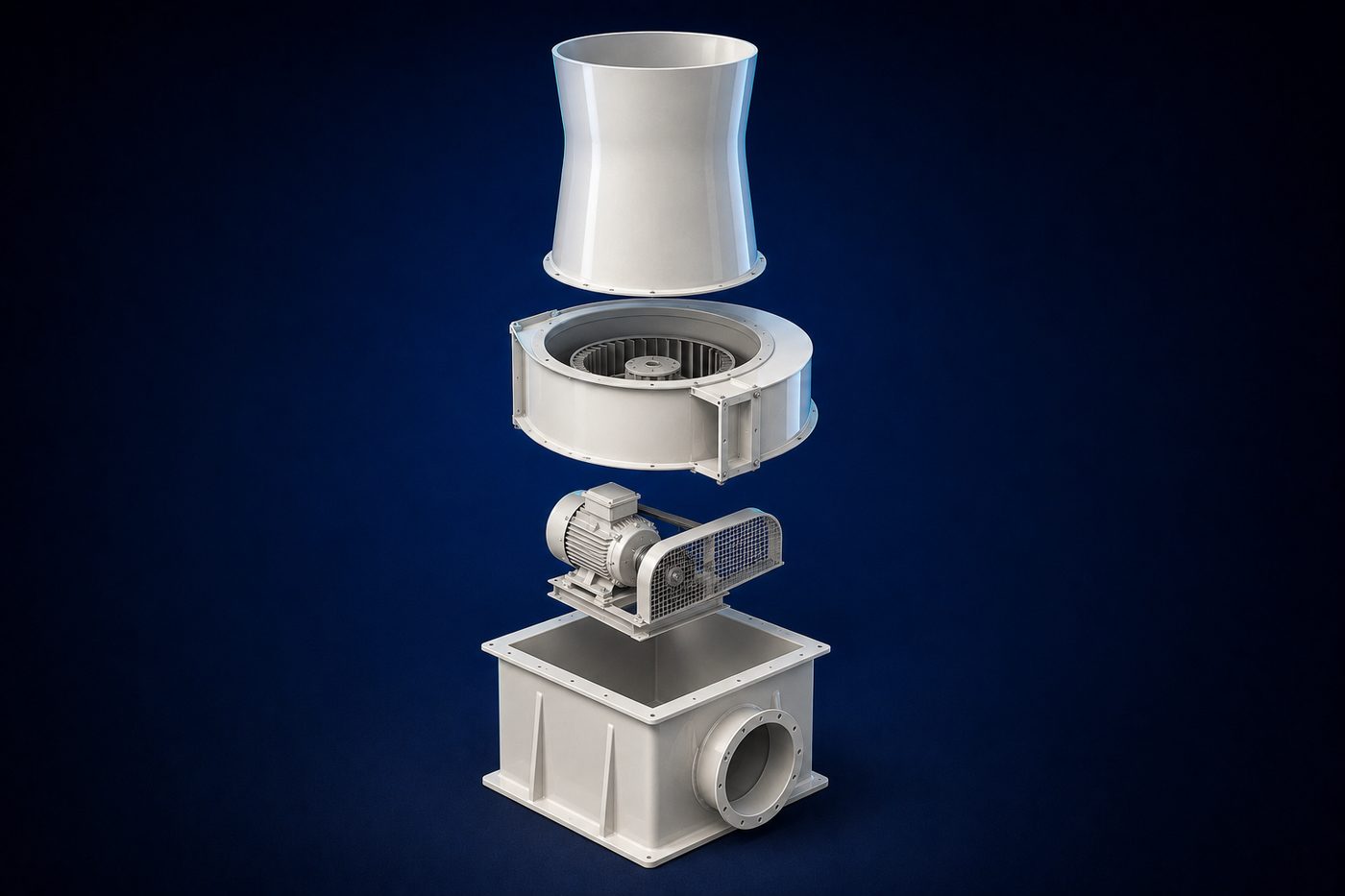
Air is drawn from the source or controlled room, carried through a compatible duct path and discharged at a coordinated location. The fan must suit the design duty and airstream, while the controls maintain the intended relationship between exhaust, make-up air and room operation.
- 01
Capture at the source
The hood or extraction point establishes where contaminated air enters the exhaust system.
- 02
Maintain containment
Exhaust and make-up air are coordinated around the required room and device operating strategy.
- 03
Convey through the system
Duct routing, materials and fan duty are reviewed against the stated airstream and resistance.
- 04
Discharge and monitor
The outlet arrangement and controls are coordinated with the roof, surrounding intakes and project procedures.
Build the selection from the laboratory basis.
The enquiry should make the source, operating modes and interfaces visible. Final equipment basis and configuration remain subject to project confirmation.
01Source and room strategy
Identify each hood or extraction point and describe the intended room pressure relationship.
02Air duty and diversity
Provide scheduled airflow, operating modes and any simultaneous-use assumptions.
03Airstream description
State the known process, contaminant category and material-compatibility requirements for review.
04Duct and discharge route
Share the system resistance, routing, outlet location and nearby air intakes or occupied areas.
05Controls and resilience
Describe the control sequence, monitoring interfaces, standby intent and access limitations.
Plan your enquiry
Service planning is part of containment.
Installation and maintenance methods should respect the stated airstream and laboratory procedures. Access, isolation and safe work arrangements must be coordinated before equipment placement is fixed.